

Does a 1000wh Ebike Battery support fast charging?
Nov 13, 2026
Leave a message
If you’ve ever shopped for e-bikes, you’ve probably noticed how quickly battery capacity evolves—from the original 300Wh units that got you through city commutes to the 1000Wh batteries that power backcountry adventures and multi-day rides. As a supplier of 1000Wh e-bike batteries, I get this question at least twice a week: Can a 1000Wh ebike battery support fast charging? It’s a fair one, because fast charging promises less time plugged in and more time riding, especially for anyone who depends on their e-bike for work, long trips, or just fun. The answer isn’t a simple yes or no—it hinges on battery chemistry, design, and a few key technical details that I’ve learned working with hundreds of riders and manufacturers over the years.
First, let’s break down what a 1000Wh e-bike battery even is. Watt-hours (Wh) are the standard measure of battery energy, calculated by multiplying voltage (V) by amp-hours (Ah). A 1000Wh battery could be, for example, a 48V 21Ah pack, a 52V ~19Ah pack, or even a 36V ~27Ah pack—each uses different lithium-ion cells tailored to the e-bike’s motor, frame, and intended use. For context, most entry-level commuter e-bikes run on 500Wh batteries, so a 1000Wh unit is essentially twice the capacity, designed for extended range without carrying extra weight.
Now, fast charging for e-bikes is different from fast charging your phone. While a smartphone might take a 25W charge, e-bike fast charging typically ranges from 500W to 1000W, sometimes higher. The critical point here is that fast charging isn’t just about the charger—it’s about the battery’s ability to accept that current without damaging cells. Lithium-ion cells, the standard for e-bikes, have a maximum charge rate measured in C, where 1C means charging the full battery capacity in one hour. So a 1000Wh battery with a 1C charge rate would take 1 hour to charge from empty to full, while a 2C rate would take 30 minutes, and so on.
Not all 1000Wh batteries are built the same, though. Let’s talk about cell type, because that’s the biggest factor in fast charging compatibility. I’ve worked with two main cell chemistries for e-bikes: lithium-ion phosphate (LFP) and lithium-ion polymer (LiPo), but the most common is lithium-ion cobalt oxide (NMC) for high-capacity packs. NMC cells can handle higher charge rates, often up to 2C or even 3C, which makes them ideal for fast charging. LFP cells, while known for longer lifespan and better safety, usually have lower charge rates—typically 1C to 1.5C, so fast charging a 1000Wh LFP battery would cap out around 500W, which is technically fast compared to standard 250W chargers, but not as rapid as NMC options.
One common question I get: Can I fast charge any 1000Wh battery if I use a higher-wattage charger? The short answer is no, and here’s why. Each battery pack has a built-in Battery Management System (BMS) that acts as a guardrail. The BMS monitors cell temperature, voltage, and current, and it will limit charge rate if it detects any risk of overheating or cell damage. If your 1000Wh battery has a BMS rated for a 1C charge rate, plugging in a 1000W fast charger will trigger the BMS to throttle the charge to 500W max—you won’t get full fast charging, and you could even shorten the battery’s lifespan by forcing it to take more current than it’s designed for.
That said, many modern 1000Wh ebike batteries are engineered to support fast charging, especially for riders who don’t want to wait 3+ hours for a full charge. Take our own line: we design our 1000Wh packs with high-quality NMC cells, a BMS rated for 2C charge, and thermal management features that keep cells cool during fast charging. A rider using our 1000Wh battery can charge from 0 to 80% in 45 minutes, and 100% in 90 minutes—way faster than standard chargers. For context, a standard 250W charger would take about 4 hours to fully charge a 1000Wh battery, so that’s a huge difference for someone who needs to top up between morning and afternoon rides.
But there are caveats to that. Fast charging isn’t free—there are trade-offs. Charging a lithium-ion battery at higher rates generates more heat, which accelerates cell degradation over time. That means a battery that fast charges might only last 800 to 1000 charge cycles, compared to 1200 to 1500 cycles for a battery that only charges at 1C. For most riders, that’s a reasonable trade-off for convenience, but it’s important to choose a battery that’s designed to handle that stress. Cheap off-brand 1000Wh batteries might use low-grade cells and BMS that can’t handle fast charging, leading to faster wear or even safety risks like swelling.
Another factor: the e-bike’s motor and power output. A 1000Wh battery paired with a high-power motor, like a 1500W off-road e-bike motor, might need fast charging to keep up with heavy use. If you’re using your e-bike for mountain biking or long-distance touring, a fast-charging 1000Wh battery lets you get back on the trail quicker instead of waiting around. On the other hand, if you have a small 250W commuter e-bike, a 1000Wh battery might be overkill, and fast charging might not offer as much practical benefit—you could just charge it overnight on a standard charger and forget about it.
Let’s also clear up a common misconception: higher capacity doesn’t mean worse fast charging. Some riders assume that a larger 1000Wh battery can’t support fast charging because it has more cells to manage, but that’s not true. It’s all about how the cells are wired and what the BMS is rated for. For example, a 24ah Battery for Electric Bike (that’s a common 1000Wh 48V pack) can be wired in parallel with high-current cells to support 2C charging, making it fast-charging capable. If you’re looking for a versatile option, our E Bike Battery Li Ion 48V line includes 1000Wh packs with built-in fast charging that work with most standard e-bike frames, including concealed designs. Speaking of concealed, many riders prefer an Electric Bike Concealed Battery for a sleek look, and we also make fast-charging 1000Wh options in that form factor, so you don’t have to choose between style and speed.
What about voltage? A 52V battery, like our 52V 17ah Ebike Battery, is another common 1000Wh configuration. Higher voltage packs can often support faster charging because the same wattage translates to lower current—so a 1000W charge on a 52V battery is about 19A, while on a 48V it’s ~21A. That small difference makes it easier on the cells, so many 52V 1000Wh batteries can handle faster charge rates than lower voltage ones. That’s why when we design our fast-charging packs, we often use 52V configurations for optimal performance.
Now, if you’re considering a fast-charging 1000Wh ebike battery, here are a few tips to make sure you get one that works for you. First, check the charge rate rating—look for a battery that advertises at least 1.5C, ideally 2C, to get true fast charging. Second, make sure the BMS is from a reputable manufacturer; a good BMS will not only support high charge rates but also protect your battery from overcharging, overheating, and short circuits. Third, match the battery to your e-bike’s power needs. If you have a 1500W Ebike Motor, you’ll want a battery that can deliver consistent high current and handle fast charging, so our Battery for 1500w Ebike line is built exactly for that.

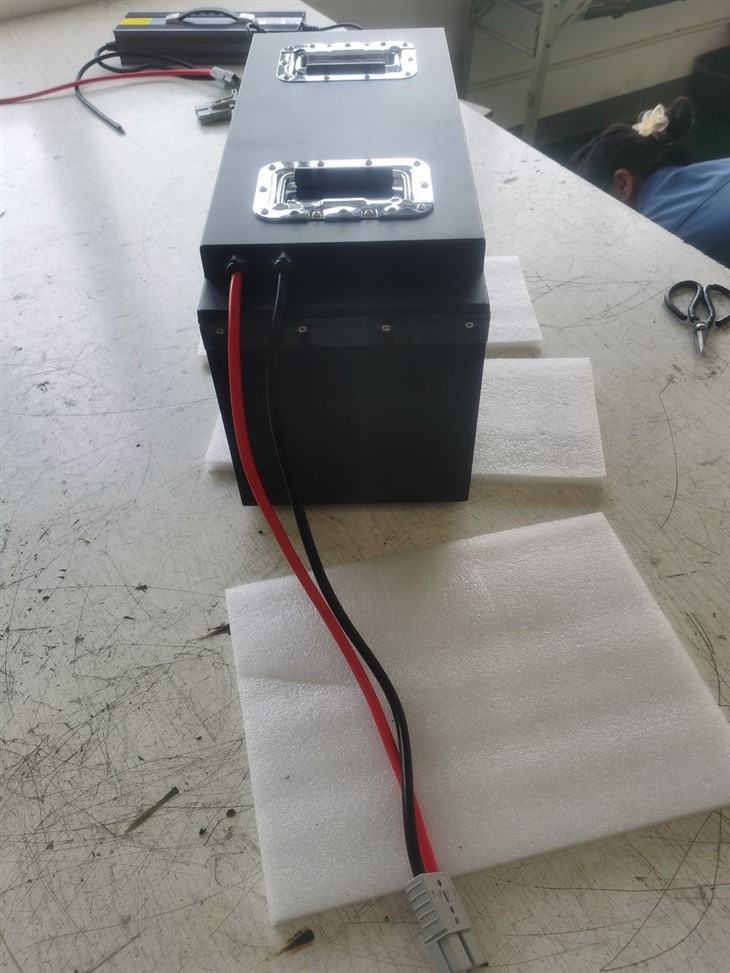
It’s also important to use the right charger. Even if your battery can handle fast charging, a cheap off-brand fast charger might not be compatible, or could damage the battery. We always recommend using chargers designed for your specific battery pack, which you can find alongside our 1000Wh options. Avoid using third-party chargers that don’t match your battery’s voltage and amperage, as that’s one of the most common causes of fast charging issues and battery damage.
So, to circle back to the original question: Does a 1000Wh ebike battery support fast charging? The answer is yes—if it’s designed to. Modern 1000Wh packs with high-quality NMC cells, a robust BMS, and thermal management can easily support 1C to 2C fast charging, cutting charge times by half or more compared to standard chargers. The key is choosing a battery built for that purpose, not just a high-capacity unit. For riders who need range and convenience, a fast-charging 1000Wh battery is a game-changer—whether you’re commuting to work, exploring trails, or running errands around town.
If you’re in the market for a reliable 1000Wh ebike battery that supports fast charging, or have questions about which configuration works best for your e-bike, reach out to our team to discuss your specific needs. We’re here to help you find the right battery for your ride, with options that fit all types of e-bikes and use cases.
References:
- Lithium-Ion Battery Charging and Discharging Characteristics, International Journal of Energy Research, 2021.
- E-Bike Battery Capacity and Performance Guidelines, Electric Transportation Industry Association, 2022.
- Impact of Fast Charging on Lithium-Ion Battery Lifespan, Journal of Power Sources, 2020.
- BMS Functionality for High-Capacity E-Bike Batteries, Battery University, 2023.